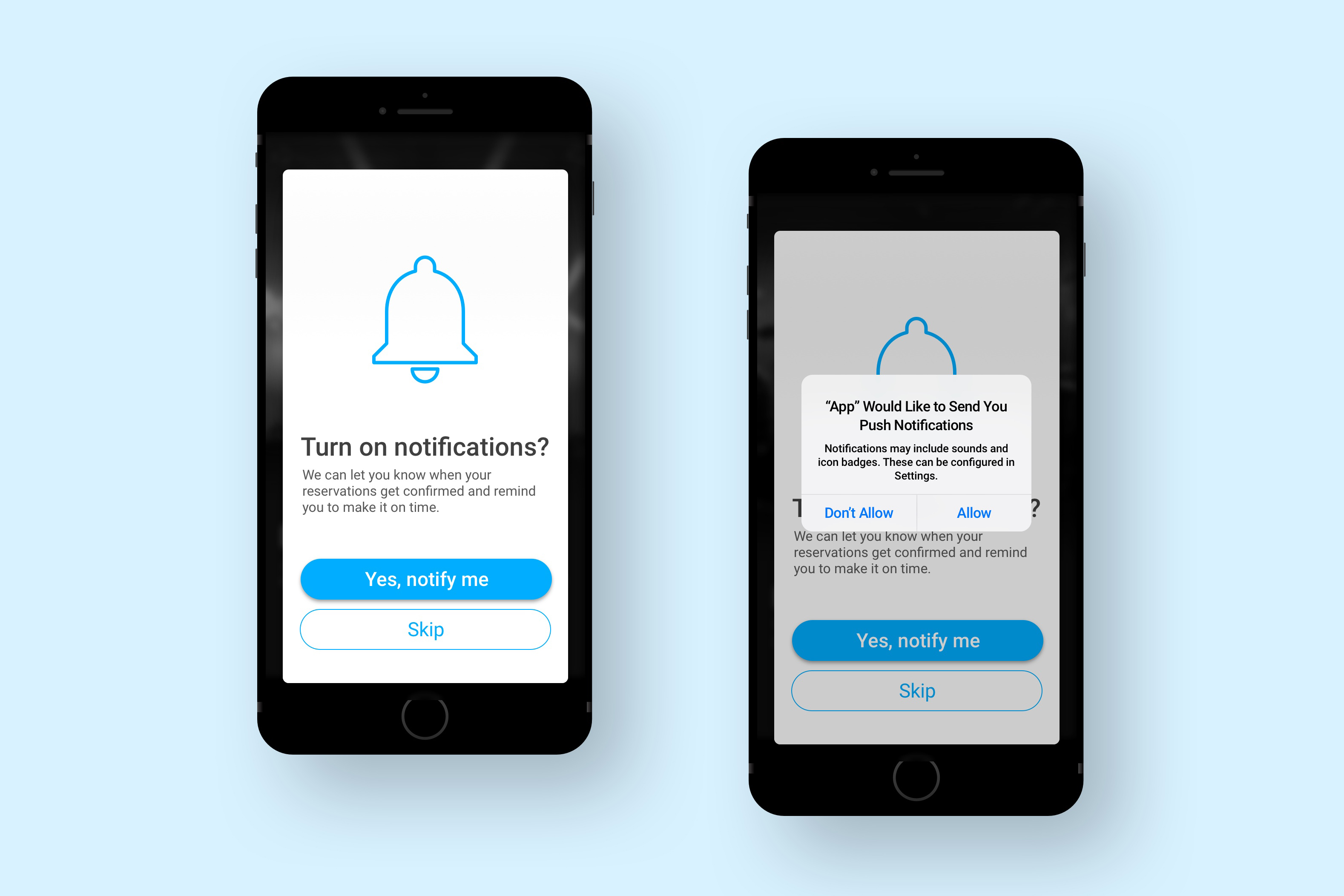
Why most times this is the best answer.
Often, clients or other designer when discussing a project ask me:
Do you x, y z are correct?
90% of the time, my answer is:
It depends.
I used to feel bad about giving people this particular answer.
Somehow it made me feel that I'm not a good enough professional, or that I don't have enough experience.
While, you can never have enough experience and there always is something to learn in this profession, I started reaching out to other designers and reading about this particular subject only to realize that the way I was judging myself was not correct.
In fact "it depends" seems to be the right answer almost all the time.
As Steve Krug pointed out in Don't Make Me Think:
Design is a complicated process and the real answer to most of the questions people ask me is "It depends".
There are definitely guiding principles.
For instance, Material Design, shows how to apply elements and principles thus taking a lot of guessing out of the process.
But, each app or website is a separate entity filled with particularities and many times it is impossible to know if anything is "right" or "wrong".
The road to knowing what "right" and "wrong" is involves user testing.
I take a lot of time trying to imagine how other people would perform various tasks.
I make carefully planed user journeys, only to realize in user testing that people don't share my logic and mostly act by impulse or curiosity.
Don't get me wrong, this doesn't mean that we shouldn't invest a lot of time in making user journeys, but we also need to be mindful about alternate paths for the same action.
Testing will always make new paths and unexplored areas appear. The more we do it, the better the final product will be.
More human-like experiences.
Integrate permission requests in your strategy.
Using a whiteboard is not just an interview challenge.